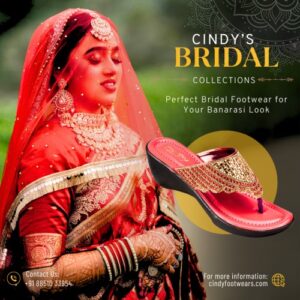
A wedding day is a beautiful blend of emotions, rituals, excitement, and celebration—and for the bride, it also means hours of standing, walking, greeting guests, and posing for endless photos. In the midst of all the sparkle and grandeur, one detail often gets overlooked but plays a major role in the bride’s comfort: footwear. Traditionally, heels have been the go-to choice for adding elegance and height, but in recent years, slippers and flats have gained popularity for their comfort and practicality. This brings many brides to a simple dilemma: Should you wear heels or slippers on your wedding day?
To make the right choice, it’s important to understand what bridal shoes actually are and how they influence the overall look and experience, says Cindy Footwear, the leading women’s footwear brand and one of the top Indian shoes wholesalers and suppliers for bridal heels and slippers.

What Are Bridal Shoes?
Bridal shoes are footwear chosen or designed to complement a bride’s outfit and support her throughout the wedding day. These shoes are crafted not only for beauty but also for stability and comfort, considering the long hours of ceremonies and celebrations involved. They generally coordinate with the bride’s attire in terms of color and design, often featuring detailed embroidery, embellishments, or luxurious fabrics.
Bridal shoes come in many forms, including high heels, block heels, wedges, juttis, mojaris, ballerina flats, sandals, and soft slip-ons. While their primary role is to elevate the overall bridal look, their functional purpose—supporting the bride’s movement gracefully—is equally important.

Why Brides Choose Heels?
Heels have long been associated with elegance and sophistication. Many brides opt for heels because they enhance posture, add height, and make the fall of the outfit look more refined. Whether it’s a lehenga, gown, or saree, a slight lift can make the attire drape more beautifully and give the bride a statuesque appearance.
Heels also bring a touch of glamour, especially in photos. Brides who are used to wearing heels regularly may feel confident and comfortable walking in them even during long ceremonies. For brides who want to balance height differences with the groom or simply love the poised look that heels offer, this option becomes naturally appealing.
However, heels come with limitations. Weddings often involve hours of standing and moving around, and even the most comfortable pair can cause pain, swelling, or discomfort over time. Long hemlines can increase the risk of tripping, particularly with stilettos. Outdoor venues like beaches, lawns, or uneven surfaces can make walking in heels difficult. For brides wearing heavy outfits, heels add extra strain on the feet and back. These factors make heels more suitable for shorter events, photo sessions, or receptions rather than long traditional ceremonies.

Why Brides Prefer Slippers or Flats?
Slippers and flats—whether they are elegant juttis, embellished sandals, or cushioned slip-ons—have become a modern favourite among brides. The biggest advantage is comfort. Flats allow the bride to move freely during rituals, dance performances, or guest interactions without worrying about pain or imbalance. They also eliminate the risk of tripping, making them a safer choice for heavy or layered outfits.
For outdoor or destination weddings, slippers provide ease of movement on grass, sand, or uneven ground. Many designer flats today are just as beautiful as heels, featuring intricate embroidery and jewel-like details that complement bridal outfits perfectly. Brides who prioritize comfort and stability often find flats to be the most practical and reliable option for long wedding ceremonies.
The only limitation is the lack of added height, which some brides may miss. Certain types of flats may also provide less arch support if worn continuously for long hours. However, for the majority of brides, the comfort advantage outweighs these downsides.

Making the Right Choice
The decision between heels and slippers ultimately depends on the bride’s comfort level, outfit, venue, and personal style. Brides who enjoy wearing heels and want extra height can choose stable options like block heels or wedges, which offer better support. Brides who prioritise comfort, mobility, and ease should confidently choose flats or slippers, knowing they will move through their wedding day without pain.
Many brides today choose a smart middle path—wearing heels for their entry, couple photos, or reception, and switching to flats for rituals, dancing, and longer events. This ensures they enjoy both elegance and comfort.
There is no one-size-fits-all answer. The best wedding footwear is the one that helps you feel confident, graceful, and comfortable throughout your special day. Whether you choose heels or slippers, the right pair will support not just your outfit but your entire wedding experience. A happy, comfortable bride truly makes the most stunning impression.

Ms. Shradha Wadhwa is the dynamic and young entrepreneur of Cindy Footwears. Cindy Footwears is a top-notch Indian footwear wholesaler and supplier that facilitates footwear fashion and retail needs for every shoe retailer in India and abroad. Cindy holds all the expertise and experience needed to help footwear retailers create a niche for themselves in their respective markets. Cindy Footwear’s unique design and manufacturing capabilities enable the organization to offer tailored and seamless solutions to anyone looking to purchase shoes in large quantities.